Gardening in Austin, Texas. It's not for sissies.

Many years ago, there was a gorgeous European Antique store named Homestead in the heart of Texas Hill Country, in Fredericksburg, TX. I used to make sojourns to Fred just to visit Homestead Antiques and Room No. 5, a textile/bedding nirvana. I easily spent hours looking at the pretties. Sadly, those two stores closed a few years ago, and my reasons to visit Fredericksburg diminished considerably. Other than for fresh peaches, of course.

Natural light throughout the store shows off not only the quality products but also the architectural detail of this 1895 building.

In 2005, I took a new route to my dad’s farm in Bumf..  Gorman, Texas. (Think middle of nowhere, northwest of Austin) Determined to find something interesting to look at along the way, I eyeballed the passing tiny towns that I hadn’t been in in centuries. Much to my surprise, I saw a large, gorgeously-old building with a sign painted on the side – Homestead – in a very familiar font. Could it be?

Unique and sizeable antiques are throughout the large space

Yes! Homestead Antiques relocated to Hico, TX. I have to admit, that sentence I just wrote really sounds like a mistake. Hico? Population 1,379, located about an hour and a half southwest of Fort Worth. Home to cows and cowboys, horses and cowgirls, a few old farts, and now a luxury decor boutique.

Quality European styled upholstery fabrics are very well priced and in stock.

I had to stop. And since that day, I’ve intentionally made this route to my dad’s farm the preferred route, just to get a hit of the glorious scenery in this fine store.

Linens off the shelf are predominately Peacock Alley, mixed here with custom and antique pieces

It’s hard to find European anything in Texas, and this store is worth the trip just to see their goods.

Lush Custom bedding is created with their Euro fabrics. (The colors in this are way off - my cellphone obviously isn't color-calibrated. It is truly luxurious and well done.)

You’ll find handmade items that I’ve not seen anywhere else. This antique gazebo that I lusted for was still strung with post-holiday lighting and an enviable shabby garland.

A closeup of that garland reveals some creative – and potential DIY idea – styling:

If I start now, I should have enough garland to use by next Christmas

And there are a few pieces of whimsy around:

Who wouldn't put a corset on their lamp?

Look closely. This flower is actually the opened leathers from an old baseball!

Custom furniture can be ordered, and there are many one-of-a-kind antique pieces as well:

I just had to share my enjoyment of this store – I asked the owners if I could take photos and she readily agreed. While many the darker tones don’t fit my current beachy-theme style, the architectural interest of all of their items lends to many styles. If you are looking to take a drive in the country sometime, put this one on your list.  If you get on their email list, you’ll be notified of their big Antique Festivals that they host several times each year.

PS: My dream store, Room No. 5, briefly opened in Hico as well. Sadly, the timing was at the same time as our economic downturn, and they just couldn’t make it.  Homestead appears to be doing just fine!

Yard of the Month Winner

About a decade ago, my little neighborhood began awarding a Yard of the Month award to encourage people to take care of their yards. At the time, the neighborhood needed that encouragement, I have to say. Over the past years, though, new owners have taken pride in their yards, as well as realized the need to create landscape other than a thirsty lawn. My hard work in the front yard paid off this month, as I took the award. I received gift certificates from our sponsors, Emerald Garden and Mandola’s Restaurant.

I have to admit I was surprised…my front bed spent the summer with NO blooms and dying plants. I found out recently that I’d had sprinkler head issues that I was unaware of, so nothing was being watered like I thought. Given that knowledge, I have to give kudos to these plants for even surviving. And bless ‘em, they got a meager 1.5″ of rain after all that heat and all of those blooms that had been tucked inside decided to expose themselves.

I think it was actually the Fall Aster right on the front corner that won the prize.

Or maybe it was the Autumn Sage (Salvia Greggii) living up to its name with an autumn flush of hot pink blooms? (I just realized that there are buds on the Mexican Mint Marigold next to the Salvia! I didn’t see them until in this pic).

Perhaps it was the Variegated Dianella Flax Lily that stayed out of the sun all summer with its spot nestled against the north side of the house?

Or it could be the Blackfoot Daisies that stopped blooming in June and suddenly burst into flower as they cascade over the curb. Ruby Crystals Grass surprised me with another flush of blooms. Obviously, I hadn’t removed the dead spikes from the spring bloom cycle, since I didn’t go outdoors from May until the end of September.

Or maybe it’s my first ever Datura that I’ve successfully grown? Yes, this rampant grower has always died on my watch previously. This is from seed from Lori, Gardener of Good and Evil. I love how it located itself amidst the gomphrena.

Maybe it could be the impossible-to-kill Variegated American Agave, a passalong from Zanthan Gardens? I was thrilled when I found yellow-blooming hardy Ice Plant to accompany it. The yellow blooms pick up the yellow edges of the agave nicely.

It might have been the overall view.

Naaa. I’m pretty sure it was the Fall Aster.

Natural Gardener

I am joining in with  Pam/Digging to showcase our fabulous locally owned nurseries around Austin.  During this epic drought and heat we are experiencing in Central Texas, planting slowed to a crawl during the normally busiest season for these folks. These businesses have served our community for decades, and served us well. If you can get there, drop in soon and spend some dough. Though we are dry, fall planting can continue. The well trained and educated staff will help you make good choices to get through this.  This week, we take a peek at Natural Gardener.

I am continuing in my own quest to modify my garden to be filled with more decor and less plants that need my attention in the heat. I can guarantee these local nurseries have gorgeous things you won’t find in ANY big box store.  And when we are talking about decor at Natural Gardener, we are talking ABUNDANCE.

These gorgeous black pots look like Halloween with the Orange ones behind them.

Orange colors, both for fall and for the University of Texas, are on display in many places.

UT fans should have this awesome display. It looks fabulous in person.

In keeping with its organic crunchy-granola name, Natural Gardener has its own Austin Attitude. My last post on Barton Springs Nursery showed their decor more muted in tones, with some French stylings and potential for formal gardens and understatement.

I have my choice of aqua pots in every size and shape it seems.

I would say the opposite about Natural Gardener! It is a place ready for a fiesta. A party just looking for a place to happen.  Add a margarita machine and call ‘er done. Bright colors abound, and many many choices.


Solar powered outdoor party lights! Oh Yeah.

Gorgeous Adirondack chairs are scattered throughout the nursery, and during October all garden furniture is on sale. These festive red chairs come in all those colors (of course!) you see on the sample boards hanging on the chairback on the right.

If I decide to add a disappearing fountain (always a great garden feature), they have shapes and colors abounding. These fountains below are but a small sampling of their choices.

And more pots! My camera couldn’t even begin to show you how many. More than any other nursery in town, I believe. Every color, shape, size, attitude, glaze imaginable.

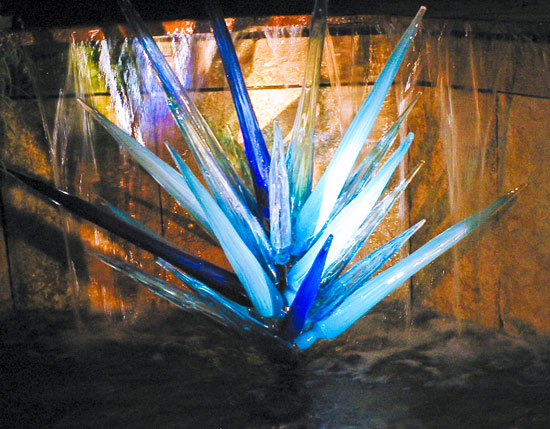
How cool is this outdoor lantern below? It might be on my “must have” list now. They have an assortment of blown glass, artsy, solar powered hanging lanterns – gorgeous!  Can’t you see these glowing at night without your having to plug them in? I’m thinking a grouping…

Or perhaps you might want a more “natural” party? These mexican styled bird house gourds could add the touch you need.

I suggest you put on your party hat and make tracks to Natural Gardener to get ready for the upcoming holiday parties that you are now going to want to have in your yard.  And please invite me – I’ll bring the mojitos!  And oh yes, they have lots of plants, too. And compost, mulch, dirt, custom organic fertilizers and so much more.

Barton Springs Nursery

Thanks to Pam @ Digging for hosting “Support your Local Independent Nursery Month” during October.  Check her site for links to all the great posts about the plethora of wonderful locally-owned nurseries in Austin and surrounding areas.

Today the Texas Climate Control Center issued, what is for me, the nail in the coffin on my Life as a Gardener in Texas. I quote from the Austin American Statesman:

“The current drought that has been called the state’s worst one-year drought on record could be just the start of dry spell that could last until 2020, the Texas state climatologist said today…Record low rainfall means the period between October and August was Austin’s driest since records started being kept more than a century ago…Meteorologists predicted dry conditions to last from a La Niña system returning in 2012 and dry conditions lasting long-term beyond the next decade.”

I might be tempted to plant a few bulbs due to their inherent hardiness and amazing flowers.

I don’t have the persistence, fortitude, time and money that it will take to remain a “gardener” in Austin anymore with those dire predictions of drought. However, I still want my yard to look interesting and pretty.  Making use of my number-one-passion of interior design and architecture, I’m planning to slowly remove planting beds and replace them with decorative outdoor hardscape, garden art, and who knows what else.

Look at this bounty of goodness at Barton Springs Nursery.

I say “slowly” because I”m on a limited budget, and because good design is something I DO have patience for.  I enjoy the hunt for something unique, the recycling process of a great find at a garage sale, and the prowl for ideas at our local nurseries.  In that vein, my approach to “Support Your Local Nursery Month” is to showcase some of the outdoor decorative ideas they each provide.  There’s much more than plants at these wonderful nurseries!

My first stop was at Barton Springs Nursery, 3601 Bee Cave RD. Since I’ve lived and worked near this area for over a decade, I’ve made innumerable trips here. It’s one of my “go to” place for plants, decorative pieces, dirt, mulch, compost and just asking questions from the helpful and knowledgeable staff.  My friends who know me well have purchased Gift Certificates from here for my birthday presents. Needless to say, they were some of my favorite gifts!

Barton Springs Nursery, located on Bee Cave Road in Westlake, grows many of their own plants in greenhouses on the property. Committment to natives, customer education, and extremely helpful customer service makes them one of the best.

These large painted metal “plants” could really be cute as a focal point set along a pathway. Talk about drought, freeze and heat tolerant! This could help create that tropical feel that I enjoy.

These oversized pots would work well with the metal plant sculptures above to create a gorgeous vignette that needs no further care. If I wanted, I could put some succulents or grasses in the pots that need very little attention. Plants would soften the edges and help tie the vignette together, but since I’m wanting much less maintenance, I might consider something else. I’ll keep my eyes open for ideas.

This outdoor lantern may have just gone on my “must have” list! Look at that wonderful shape and color. Oh, I think these photo trips are going to be dangerous for my pocketbook as I intentionally investigate garden decor at each nursery.

These elegant Aqua (my color!) trellises would continue that great Shabby Chic/French theme that I enjoy. These are so decorative I could put one on the fence and it wouldn’t matter if it had a plant on it or not. Several together could be used to define an area or create a backdrop.  I’ll have to decide if I’m going Tropical or Shabby? Perhaps vignettes in different parts of the yard could have different attitudes.

These gorgeous outdoor rugs are already on my Must Have list, since I already purchased one from Barton Springs Nursery last year. It defines my outdoor seating area in the perfect way, and after The Hottest Summer in the History in the United States in all of Recorded Time Without a Drop of Rain, it still looks like new. (It was shaded under a gazebo, but left out in the weather completely.) I’m very happy with it and it’s one of my favorite purchases. They are very reasonably priced, too.

If you’re a UT fan or have a native garden filled with grasses, agaves and other southwestern style plants, these cuties would fit right in. I really love them as a herd.  I could imagine them by a pool, or creating a focal point across a lawn to define a corner.

Support your local independently owned nursery this month and all through the fall. This is the time for creating your beds, hardscaping, and amending soil.  Talk to them about ideas for tough plants, and new paradigms for your yard.


I’m throwing in the towel as a landscape artist. Oh, I’ve had a few intentional combos that worked, true. But as I’m quickly learning, it’s hard to beat Mother Nature at her own game. After all, she has a LOT more experience than I do at this whole plant combining thing. I think I’ll just leave it all up to her from now on.

Above, the unexpected return of a frozen to the roots and assumed dead Dicliptera combines beautifully with randomly reseeding Gomphrena, creating a 5 star Hummingbird and Butterfly buffet.

And while I did plant it in these spots, I had no idea that these two –Dwarf Lion’s Tail and Society Garlic– would reach similar heights and play so well together.

Another one that Mother Nature knew would work; pairing the strong orange-red of the Gomphrena with Esperanza (Yellow Bells). Besides being stunning in the heat and drought, it is a strong Butterfly attracting combination. I also like the planned combination of the Esperanza complimenting the yellow edges of variegated Agave Americana.

Are you seeing the theme here? Mother Nature knows how to take one awesome accessory – in this case, naturally-reseeding-from-last-year-in-random-spots Gomphrena – and toss it around in the best way. This one landed inside the same pot as my Nolina, and look how great that looks. I would never have thought of that!

And of course, I have to end with my favorite natural combination, below.

A couple of years ago, I found a photo of My Perfect Living Room. Before I saw it, I didn’t know I had a Perfect Living Room, but I’m pretty sure I actually gasped when I saw the photo.

The striped couches! The incredible architectural barnwood ceiling and doors! Sisal rug over wood flooring. My signature aqua colors. Minimal accessories. The rustic, beachy, comfortable feel, oh my.

I loved this room so much that I researched it and found the name of the designer (Jill Kantelberg) and contacted her via email. She was extremely gracious, and didn’t seem to be bothered by my gushing email praising her omniscient ability to create My Perfect Living Room without even knowing I exist.  She even traded a few emails back and forth, giving me further ideas for my own real world  living room, and how to find a fabric similar to those stunning couches.

Needless to say, my 1979 builder’s tract home doesn’t have the architecture of this stunning cottage above. However, since I already decorate with a shabby beach cottage style (in my landlocked Central Texas home, go figure), there are many inspirations that I decided to take from this room.

Here’s my starting point:

There used to be a wall-to-wall bookcase behind the couch which was damaged in one of the many water incidents in this house.

You can see my hodgepodge of styles here. The boxes behind the couch aren’t there all the time, I promise. I don’t have a better pic of the “before”, so you’ll have to look past some things to see the bones – sand-colored walls, white slipcover couch, golden leather chair, turquoise linen drapes and a faux leather/wood ottoman. A far cry from My Perfect Living Room.

Everything I wanted to do needed to be done on a super tight budget. Somehow I had to bring in some barnwood to get the feel of the rustic ceiling and doors in my inspiration room.  I also needed to replace the storage that I lost from my damaged bookshelves that are now gone. I found this furniture site nearby in Temple and ordered some bookcases.

Here was my way to bring in a substantial distressed presence in the room to mimic the ceilings and doors of Jill’s room without spending a lot.

Okay, that helps bring in some interest on that wall. And ignore the fact that one of the chicken-wire doors is missing on the cabinets; it was being fixed following some damage in the installation.  Those shelves are now loaded with books.  And please also ignore the cat scratch post; it’s a permanent fixture to keep him from scratching the leather chair. You can also see the new carpet, which is a Shaw sisal lookalike with lower cost and maintenance than the textural Sisal in My Perfect Living Room photo.

I need those stripes, though, to really get the feel of that incredible room.

The amazing striped couch fabric Jill used is no longer available, so I found a similar one at at Calico Corners. Though the stripes are wider and not quite as aqua, it is a budget friendly solution with the right feel. I found a wonderful woman on Etsy to make some slipcovers for my couch pillows.

Here’s My Perfect Living Room again:

The inspiration room. Sigh.

Here’s my current living room:

Looking pretty good, don’t you agree?

The next thing that must change is my ottoman, which I’m reluctant to do. I have an emotional attachment to this one; for good reason. Long before they were being made, I envisioned an ottoman with storage underneath and soft cushioned top for putting feet on. At the time, the only thing out there were leather cushioned chunks with nothing but a solid block underneath. Wasted opportunity imho.

I searched and searched for a used oversized coffee table like this one (it has a drawer that you can’t see; great for remote controls, nail files, pens, coupons, etc) and shelves for magazines and my garden books. I cut off the legs, restained it, added casters, then took it to an upholsterer who padded and covered the top with faux leather fabric.

However, it just won’t do if I want to have my budget version of my Perfect Living Room.  There’s a great table right now at World Market that would look great, but I would no longer have my storage and a place for feet. Anyone have any suggestions? Here’s the room without any ottoman:

I’m pleased with my room; I get the feel of the expensive room for a fraction of the cost. Thanks to Jill Kantelberg for the inspiration, and to Canadian House and Home for printing it. Would love to hear your ideas to finish this room!


9/19 Update: I’m glad I waited on the coffee table purchase. World Market got in a new one (almost identical to one currently in Pottery Barn and much cheaper) that I fell in love with. I put it in my room and it made a big difference. I’m getting there, slowly but surely. I need to change my blinds and the lamp on the right and maybe get a small chest/table to go in between the two bookcases. I’m getting happier with it, though, and like that I did it on a very low budget.

beachy living room

The Birds, the birds!

This year in Central Texas, I’ve seen birds I’ve never seen here before. As always, Doves and Bluejays are in abundance, but seemingly more so than usual in my yard. I recently spotted an Eastern Starling, a common bird but not common in Austin. The state bird, the Southern Mockingbird, is everywhere I turn.

I have to assume the extreme drought once again covering the lower half of our huge state is driving birds northward that normally  might spend summers at the Gulf Coast.

I also have to question this: We had a drought this severe two years ago, and I didn’t see birds like this during that drought. Is it possible that the British Petroleum horrific oil spill in the Gulf Coast has tainted the marshes along the Gulf Shores of Texas? The Texas shore near Brownsville and South Padre island is known worldwide for its bird-watching, summer and winter both.

Whatever the reason, today I saw one I’ve never seen before. This sweetie was taking a bath in my waterfall, having a grand old time. He flew away and came back quickly with two more buddies, who delightfully enjoyed their spa stay, splashing and playing for a while.

I managed to snap these pics through my glass doors, so forgive any lack of sharpness. I was just happy to have had my camera nearby.

After much searching of Google images, I believe he is a Pine Warbler. He was pretty wet at this point, but this is the best shot of his backside and wing coloring.

I compared the Pine Warbler with the Yellow Warbler, and finally came up with Pine Warbler as the ID. I certainly could be wrong.

Does anyone out there recognize this species definitively?

Garden Tour Logo

Water Wise 2011

The 2011 Inside Austin Gardens is this Saturday, May 14. Start making your plans to go!

This 6-destination tour features the theme of Water Wise Gardening, so appropriate for our needs right now as we enter (again) into the “exceptional”, or worst possible, level of drought that is predicted to last through the summer at the very least.

This year’s tour features gardens with rainwater collection systems (assuming it will ever rain again), xeric plantings, shade gardens and lots of creativity. If you’re a little slow on the uptake and haven’t already bought your ticket for this annual event, you can view the map and learn more info about purchasing tickets here.

To give you even more encouragement to get outside and tour some exciting gardens with innovative and affordable designs for every budget, here’s a little peek at 3 of them. And no, I’m not going to show you everything. You gotta get yourself there and see it all for yourself!

The Garden of Wendy Brennan

Wendy requested that Master Gardener Link Davidson, her neighbor, create for her a Zen-filled garden with minimal maintenance and minimalistic style. While the garden itself is small, creative uses of recycled materials make it worth the trip. Below, Link chopped up a “bowling alley” of a sidewalk and turned it into fabulous step stones that guide you quietly to her door.

To facilitate moving the hoped-for rainwater into places where it can be used rather than into the street, he created a dry creek bed and berm, with large rocks for seating nearby. A Texas tough Vitex adds some cool color to the scene, accompanied by blowing feathergrass.

The Garden of Rebecca Matthews

All of the gardens I’m featuring today have lots of shade. Since my garden is also shady, I’m planning to steal I gathered inspiration from each one.

As loud of a garden as the previous one is quiet, Rebecca has a great cottage style. Utilizing found objects and handmade crafts mixed throughout the drought tolerant shade plants, her garden will tell you a story of a Master Gardener with a great laugh and welcoming smile.

One of my favorite features, below, is her entrance path. I believe the best thing you can do for your front yard is create a footpath entrance other than the driveway. Rebecca used an arbor and decomposed granite amidst her plantings and small lawn (shared companionly with her neighbor) to beckon you to “come on in”.

I enjoyed her use of cottage kitsch throughout her yard, and Rebecca is fearless with what she places outside. Stained glass, pillows, crocheted tree warmers (?), a beaded chandelier, art and comfy chairs are scattered throughout.

This daybed resides in a spot newly cleared of dreaded Asian Jasmine. Rebecca used cardboard as a cover after she pulled out by the roots, then topped with decomposed granite and mulch.

While it would be too high-maintenance for a lazy gardener like me, her garden was filled to overflowing with gorgeous and creative containers.

You’ll enjoy Rebecca’s use of decomposed granite pathways to eliminate thirsty lawns and overgrown invasive plants.

The Gardens of Sue Nazar

When I stepped into Master Gardener Sue’s tropical resort-style garden, I wasn’t sure if I was in Austin or Seattle. Her garden looks like mine wants to be when it grows up.

I really didn’t know you could do this in Austin during water restriction years. Sue credits her 20 years of composting her beds to create great dirt and additional compost tea for her astonishing results. It’s like my shade garden on ‘roids. I suppose 20 years of loving attention can create this lushness, similar to what you might see in Zilker Gardens.

Can you say wow!? And this is only the beginning. I have many more photos, but you are going to have to go see this one for yourself. You probably won’t want to leave. I certainly didn’t.

One of my favorite combos of the day was in Sue’s garden; a shade grouping of foxtail fern, newly planted annual Persian Shield, and Variegated Flax Lily Dianella, shown below. I’m pretty sure I could attain this one with my skills (or lack of). It was nearing mid-day and this photo isn’t the best to show off the bright purples against the variegated lily and hot green of the ferns. It was an awesome combo.

There are 3 other destinations on the tour that I don’t list here, including a vegetable garden with rainwater harvesting, a succulent and cactus garden and LCRA Redbud Center demonstration gardens.

Go see it for yourself, then get back here and tell me which one was your favorite!  If you need more enticement, check out the links to the blogs in my Austin list of garden bloggers. There are several preview blogs from the bloggers who attended today.

I’ve always wanted to be able to take a long shot of my yard, filled with cottagey flowering shrubs. This bed is now officially one year old, and the natives and adapted natives are happy, despite our drought.

Larkspur, Trailing Verbena in Pink and Purple, Laura Bush Petunia (returning on its own from last year), Lambs Ear, Pink Skullcap, Lion’s Tail, Society Garlic, Variegated Agave Americana, Flash the Wonder Cat, Gomphrena, Four Nerve Daisy, Zinnia, Bog Sage, Yellow blooming Ice Plant, and a bit of a Coneflower are all in this photo. Not pictured, but also blooming in this sunny bed, are Salvia Greggii, Dwarf Pomegranite, dwarf daylilies, Mystic Spires, Blackfoot daisy, Iris, Winecup, Guara, Knockout roses, and a new replacement lantana.

Not bad for early May!

This bed was greatly amended prior to planting anything, and 8 inches of organic compost was incorporated into the topsoil below the St. Augustine grass. This new soil has obviously been of significant benefit to help these plants needing well-draining soil to flourish.

Which begs the question that I’ve been pondering for some time now. If these plants are “natives”, then why do I have to amend my soil?
 
I’m not talking about adding nutrients; I understand about nutrient depletion from city watering and urban runoff. I’m talking about clay, non-draining soil that naturally occurs in a big part of Central Texas.
 
In my back yard, I do the cheaper “amend as I go” method. (Though ultimately it may not be cheaper, as I end up losing plants and having to purchase new plants to replace them, or having to buy more to fill in a space as the plant doesn’t grow as well.)

Anyway, the back yard beds aren’t as nicely amended, and nothing grows as prolifically as the front yard pictured at the top of this post. I did amend one bed for my Irises, which were thrilled with the new – well draining – soil I created. Everything else is… meh.

A handful of plants are truly worthy of the “native” designation, at least in my yard. Copper Canyon Daisy is planted in part-sun and crappy clay, and it grows huge each year, as does its neighbor plant, Fall Aster.  Rose of Sharon is just happy to be alive, no matter where it’s planted, it seems. It’s about to burst totally into bloom, and I’m looking forward to the show.

Artemesia Powis Castle is another worthy native, creating a new plant from every cutting that I stick in the ground, no matter how dry, dense, or depleted. Cast Iron plant is just that, tough as nails no matter what. Purple Heart grows everywhere, but does die in our colder winters.

Agaves, popular as they are, can’t be native to the gummy blackland prairie in central Austin.  Texas Parks and Wildlife Magazine calls it “rich, black, waxy, alkaline, calciferous soil.” Agaves must have fast draining soil to survive. Perhaps they might be native to the Edward’s Plateau. The Edwards plateau soil of central Texas is yellow clay, has a limestone base, and often has caliche mixed into the top layer.

So I guess my yard is considered filled with natives, adapted natives and “others” that thrive in soil amended so much to be unrecognizable as naturally-occurring in my part of Austin. I just can’t consider it native if I have to completely bring in new soil from elsewhere in order for it to live.

Plants I can’t grow

I hope everyone has this issue. I hope it isn’t just me. I have a few plants that no matter what, I kill them. I buy them from reputable nurseries, and invariably they tell me “This one is so easy. Just stick it in the ground, it will grow.” Or something like that. Or maybe that’s just what I heard because that’s what I’m looking for, who knows?

Bamboo Muhly is a lovely grass, swaying in the breezes and filling blank spaces with loosely woven tendrils that can get 4 feet tall, I’ve heard. Supposedly, it’s quite hardy and easy to grow (ha!).  Here’s what it looks like in other people’s yards:

Healthy Bamboo Muhly that is happy with its owner

Here’s what my Bamboo Muhly ALWAYS looks like:

This Bamboo Muhly in my yard isn't the first one of its kind that I've killed. I have 6 more that look just like this one.

You’d think,  being that it’s a Sedge, Sparkler Sedge should be fairly easy to grow. It’s so pretty in the shade, and I believe it would be lovely mixed with ferns. (Though I’ve never managed to observe that phenomenon). Here’s a healthy specimen:

Wow, can't you just see that brightening up a shady spot?

Here’s my 3rd try on this kind-of expensive and hard to find plant: (No, I’m not clenching my teeth with that statement, no).

This started out so big and pretty. Sigh.

And then there’s Shrimp Plant. You know that adage, “Fool me once, shame on you. Fool me twice, shame on me.”? Well, what do you say when it’s the 3rd or 4th attempt at the same thing? A stupid rat? Insanity?

Here’s what a happy Shrimp Plant CAN look like, if someone else grows it:

Isn't this pretty? Wouldn't that be lovely in my yard?

Here’s what my Shrimp Plants invariably look like:

A new one again this year. I keep trying. Doh!

And I’m not going to mention my 3 year old Crossvines that do nothing, an Evergreen Wisteria vine that has never bloomed, and the number of Clematis and Potato Vines that have died on my watch.

However, having said that, sometimes I surprise myself with what does grow. Here’s my biggest of 4 Hostas, returning for the 3rd year.

Check it out – I do want to mention that the leaf beside it for comparison sake is an Aralia (Japanese Fatsia). Big ol’ leaves!

A mail order Hosta that was a trial. We've had 2 cold winters in a row that have helped, I think.

So ‘fess up. What plant can you not grow? Don’t leave me hanging thinking I’m the only one!

I love Irises. They are one of the few large flowering plants that flourish in Central Texas. Our heat and humidity often creates smaller blooms with tubular shapes rather than large, showy flowers. And I love me some show-off blooms!

The Iris in my garden put on an extra special show this year. Perhaps because I gave them a better bed with improved drainage and actually remembered to feed them some compost?

The first to bloom is a passalong from Annie in Austin, the White “Cemetary” Iris, an elegant and tall blooming stalk.

Next to come were the ever-dependable Amethyst Flame Irises, a welcomed passalong of a few years ago from Pam, Digging. Perhaps it was the extra cold winter we had that spurred the bulbs on to prolific blooming?

And Then! The fragrant peach Iris, again from Annie in Austin, burst into greatness. This is my first year to see this bloom, and wow! Dozens of blooms on only a few plants. But most importantly, when I leaned in to get that first whiff of the morning, I was instantly transported to my Grandmother’s Garden.

My Grandmother had her Iris beds all throughout her yard. When I smelled this fragrance, I immediately felt myself digging in the dirt beside her. She ALWAYS wore her bonnet and gardening dress (my Grandmother never wore pants, not once in her life.)

My mother had Iris, too, but when I think of my mother’s flowers I think of roses and tulips more than Iris. The Iris belonged to Granny Lena.

I’d forgotten what a good Iris can smell like. Thank you Annie!

Next to come was a trip to a new nursery with Diana, Sharing Nature’s Garden. As we entered, we both exclaimed at the same time and made a beeline for the gorgeous group of blooming Irises for sale. Fortunately, we both grabbed our favorites which weren’t the same one, so no fisticuffs ensued.

So this saturated-mango-colored Iris below joined the crowd:

And not to be outdone, today my final plant bloomed. Bob, Draco Gardens passed on this stunner from his mother’s Iris beds. At the time he gave it to me, he wasn’t sure what color it was, only that it was probably brownish or purple. When the buds FINALLY formed on this late-season bloomer, I anxiously awaited. And no, the sonogram didn’t tell me anything…(sorry, couldn’t resist…it felt like I was anticipating birth).

My impatience paid off with quite the reward! Thank you, Bob, for passing along such an exotic beauty that fits right in with the purple, lavender and white larkspur planted nearby. Isn’t this gorgeous?

I’m thrilled with the Irises, and hope that they may have many more years of prolific blooms and being passed along to even more gardens. Look at the beauty that sharing creates!

I promised Diana, Sharing Nature’s Garden, that I would finally post about my spring blooms. The passalong frilly pink Poppy from Jenny, Rock Rose, was what finally spurred me on to do it. Astute readers will note that the above picture is not a frilly pink Poppy, but is rather the state flower Texas Bluebonnet which reseeded in my decomposed granite this year.

The roses this year have been spectacular, even with only knockout roses. They must have enjoyed the extra cold winter we had. That’s also not a picture of a frilly pink Poppy, it’s Sunny Yellow Knockout, which went crazy in March and April covered with blooms.

This amazing sunny “Stop sign” bed in my front yard is bursting with blooms of all kinds. (And more to come, I’m afraid I’ve overplanted with seeds. If you can’t find me in July, somebody bring a machete.) NOTHING in this bed is yet a year old! What on earth is going to look like in year three? You can see the poppies (sans blooms) on the right of the photo.

Are you beginning to wonder if I made up this frilly pink Poppy? First I want to make sure I thank Jenny, Rock Rose for the passalong seeds, and I want you guys to tell me what is the best way to collect these seeds to ensure that I can sow some next year as well as give some away.

Okay, already, THIS is the frilly pink Poppy! Right behind her you can see the single poppies. Each one has been a surprise as to whether it will be single or frilly. I’ve had 3 frilly ones so far. They are so much fun, and so stunning. In the high winds yesterday, I discovered that a newly opened frilly pink Poppy became a single poppy as the wind blew off every single frill. Fortunately, this new one opened today.

Next to come, I have to blog about the Iris. I love those flowers, and they made me proud this year. Colors, scents, and show-offs, oh my!

After the freeze

I know, I know. I’ve been away. There’s lots to catch up on, but I’ll do that over the next few posts. Today, I want to keep it current and talk about our recent freeze. It started with some BIG west-Texas-style wind. It saved me some money, because it took out my last remaining photinia for me.

Fortunately, this photinia didn't hit the house or any desirable plants on its way down

Last year about this time, we had the coldest temps we’d had in years, in very dry weather, and for a prolonged period. Many of us in Central Texas fretted over the freeze, worked frantically to protect plants and ultimately lost quite a few despite our efforts.

What a difference a year makes!  We just had over 75 hours straight of below freezing temps, with wind chills close to zero. That’s cold for us Texans and plants accustomed to 8b weather. I observed, though, from twitter conversations, that we weren’t too concerned. Whatever would live, would live. It’s just too much effort to baby them through the summer, then have to do it again in the winter.

This Duranta looks sad, but will probably come back from the roots.

I know I’m “maturing” as a gardener, I suppose, because I’m using less exotic, borderline-hardy plants, and moving more towards the tried and true natives that I can count on. Or else I’m getting lazy and my pocketbook is getting thin.

As long as we stick to the native Columbines, they are happy and hardy.

So I’m documenting what worked and what didn’t in my garden. Between the previously mentioned post about last year’s freeze, and this post about the drought, I’ll have a list of plants that are tough. No more pansy-ass plants for me.

I know I'm picturing the over-used Cast Iron plant here, but you just gotta appreciate it's toughness and green filler. And the leaves are great in flower arrangements, to boot.

I’m learning to appreciate plants that I’ve taken for granted.

I have several Japanese Yew, and their structural grace looks good no matter the weather.

And surprised by a few.

Pink trailing Homestead Verbena provides evergreen ground cover and has a bud that looks as if it wants to open!

Some seem too delicate to survive, but they do anyway.

Native River Fern is semi-evergreen. This particular one was apparently protected enough to stay green.

And speaking of delicate, below is a passalong from ESP, and I’m delighted to learn of its hardiness! However, I’m hoping that my good friend will come to my rescue and give me the name again?

This plant deserves applause for maintaining its form no matter what.

And some I don’t know if they’ll be returning or not.

These Ground Orchids were a bit pricey, and never bloomed. Now they appear to be dead? Does anyone have any experience with them?

Diana, at Sharing Nature's Garden, tells me that this Dianella Flax Lily should return. I hope so, it's a new fall planting and gives me some needed brightness in a shady spot.

Some of my older plants have gotten smaller over the past two harsh winters.

This Aralia used to be twice the size it is now. I hope it returns to full glory someday.

This Sword Fern was quite large in its first year. The past two years, it has had to return from roots following harsh freezes and covers more ground but is less dense.

I love how the leaves of the Sword Fern turn brown after a hard freeze. They maintain shape for several days before turning to mush. It should return just fine.

Some plants do much better when I just leave them the hell alone. This Loropetalum below hasn’t been moved. It’s sibling has been relocated 4 times in 4 years. Needless to say, it is struggling but still surviving. (Blame the garden designer.)(me).

Chinese Fringe Flower, or Loropetalum, is Texas tough. I love its colors.

So what made it through the freeze in your garden? What pansy-ass plants can you tell me to avoid planting? I need John Wayne or Ann Richards style plants, not scene-stealing high maintenance Lindsey Lohans.

Texas Bluebells

At the most recent native plant sale at the Ladybird Johnson Wildflower Center, I had only one plant “must have” on my list. And then when it turned out that I couldn’t attend the sale, Diana, Sharing Nature’s Garden, nicely picked up 3 native Texas Bluebells so my list would be satisfied.  When they first began to grow this spring, I didn’t think I would like the gangly blue-green foliage. But who cares when the flowers look like this!

Native Wildflower Eustoma grandiflorum; Texas Bluebells

I found this great info on Texas Gardener Online about this wildflower:

“Bluebells can be found growing over most of Texas (except the most arid areas). It likes fertile, prairie-type soil (you will not often find it growing in deep sand) and needs at least a moderate amount of moisture. It can tolerate wet conditions, but not standing water. This one is a great choice for coastal areas where drainage is less than perfect. It will be found growing on rolling hills, on the slopes and around the bottoms of the slopes.

Bluebell is an upright, clumping-type plant, usually reaching a height of around 1 to 2 feet — occasionally slightly taller. The native variety, Eustomia exaltalum, is a short-lived perennial lasting 3 to 7 years while the Japanese varities (Lisianthes) are annual. It will often form extensive colonies — never forming a continuous, tight sod — with space (usually about a foot) between the individual plants. The foliage is pale green (or sometimes almost a blue-green) and is not palatable to grazing animals.”

Robin’s Note: I have not given these plants any more water than anything else in that bed, so they haven’t been pampered. Perhaps if we were still in our horrible exceptional drought conditions of the last two years, they wouldn’t look so good.

And remember the dead Bottlebrush Tree? It lives again – as a trellis for my Hyacinth Bean Vine. Or rather, the 4 Hyacinth Bean Vines, and 2 Moonflower vines that haven’t started growing yet. Adhering to my motto as a good Texas gal “If anything can be done, then it can be easily overdone”, I think I might need to pull 1 or 2 of those vines out of there to give it breathing and blooming room. What do you think?

Texas Bluebells in the foreground, Senorita Rosalita Cleome on the left, and way too many Hyacinth Bean Vines in the background.

I’m delighted as always to get to participate in Garden Bloggers Bloom Day, hosted monthly  by Carol, May Dreams Gardens. As my garden moves past infancy into adolescence, I am finally enjoying the lushness it is gaining. The Rose of Sharon, above, is now 3 years old and showing off some gorgeous, old-fashioned blooms from the hibiscus family.

Three different Abutilons, a great choice for my part-shade garden, are in bloom right now:

Marilyn's Choice Abutilon

Simply named "Pink" Abutilon

Patrick's Abutilon

Below, this Indigofera, or False Indigo, loves mostly shade, which makes me love it right back. It blooms off and on through the summer, is drought tolerant, and deciduous. My only minor complaint is that it is aggressive after it reaches 3 years old or so, but the runners are easily removed.

For the first time in my youthful gardening journey, I have enough going on to take a distance photo rather than a closeup of a bed. And interestingly, this sunny bed was only planted 3 months ago. What a difference the sunshine makes for our native plants! I can’t wait for another year’s growth to see what it will do!

Mystic Spires, Salvia Greggii, Canna, Bog Sage, Sunny Yellow Knockout Rose, Senorita Rosalita Cleome in part shade, dwarf Pomegranite, Society Garlic

I can’t live without Cat’s Whiskers!

A favorite for mostly shade: Cat's Whiskers. Lost last year due to freeze, so I had to buy a new one. Had to, yes!

A small garden vignette I created that expresses my cottage style that I’m aiming for. I know they aren’t for everyone, but I love Geraniums in my garden. They bloom on neglect and very little sun.

My previous several posts have been showing off (yes, I admit it) the various daylilies I’ve enjoyed this year in my part-shade daylily bed. Here’s the last varieties:

2 dwarf daylilies; Stella d'Oro and Little Grapette

A very cool daylily that I don't remember purchasing.

Mango Mango daylily, a pretty double bloom

Senorita Rosalita Cleome, a large, lovely Proven Winners annual, is in 4 spots in my garden. My previous longshot of the bed shows the afternoon-shade plant. Planted at the same time is the full sun plant below. Much larger, fuller and lusher. We’ll see how it looks in August, when the Death Star has burned everything to a crisp.

This lovely annual, Senorita Rosalita Cleome, gets full sun. Others in part sun aren't nearly as full.

Texas Bluebell, purchased at the Ladybird Johnson Wildflower Native Plant sale

Blooming "non hardy" ice plant. It froze last year in our record low temps. Fortunately I had kept a cutting protected.

Blackfoot Daisy, a sweet plant I'm trying to get established with the Mexican Feathergrass

Newly purchased Shrimp Plant for my afternoon sun only bed. I hope it works.

When my 10 year old, 12 foot tall Bottlebrush Tree died in the freeze this past winter, I was initially heartbroken. Optimist that I am, I trimmed it back severely to see if it might recover. It didn’t. It is now a lovely branched natural trellis in the midst of my new bed in the front yard. The Hyacinth Bean vine (I hate to admit that I planted 4 of them around this tree, I think I might have created a monster) is the first to bloom. I also planted Moonvines with it, because I thought the white flower would be lovely with the purple hyacinth bean flower. So far the Moonvine is above the ground, but not growing much. My first blooms on the Hyacinth Bean is below:

And I know I planted the seeds belatedly, but can you believe in this heat that I still have larkspur in mid June? I finally pulled a few out yesterday that were beginning to go brown, but these aren’t near that point.

Seeds passed along from MSS, Zanthan Gardens

I leave you with more bloom day images. Other blooms not pictured are several varieties of lantana, salvia greggii, salvia coccinea, cedar sage, portulaca, tropical hibiscus, rainlilies, yarrow, guara, verbena, Yellow Knockout Rose, Bog Sage, bicolor Iris, Agapanthus, Mexican Oregano, Heartleaf Skullcap, and Clerodendrum Butterfly Bush.

Clerodendrum Bleeding Heart vine in my acid-soil trough

I'm surprised to get more Coral Honeysuckle blooms. I guess our recent rain fooled it.

Pink Double Knockout Rose just won't stop. The hotter it gets, it seems the hotter pink the color of the blooms.

Old fashioned Crape Myrtles have started and are blooming better than they have in years. The autumn rains must have revived them.

Lookie, Diana and Lori, I actually have plumbago blooming in my yard!

Texas tough narrowleaf Zinnia has been on my wishlist for a while. I finally have a spot for it.

Society Garlic is blooming in several places in my garden. It's so light and pretty.

Follow

Get every new post delivered to your Inbox.

Join 37 other followers